El parany dels acomiadaments per IA: per què les empreses poden automatitzar massa
Un model econòmic explica per què empreses racionals poden substituir massa treballadors amb IA, erosionar la demanda i acabar perjudicant-se entre totes.
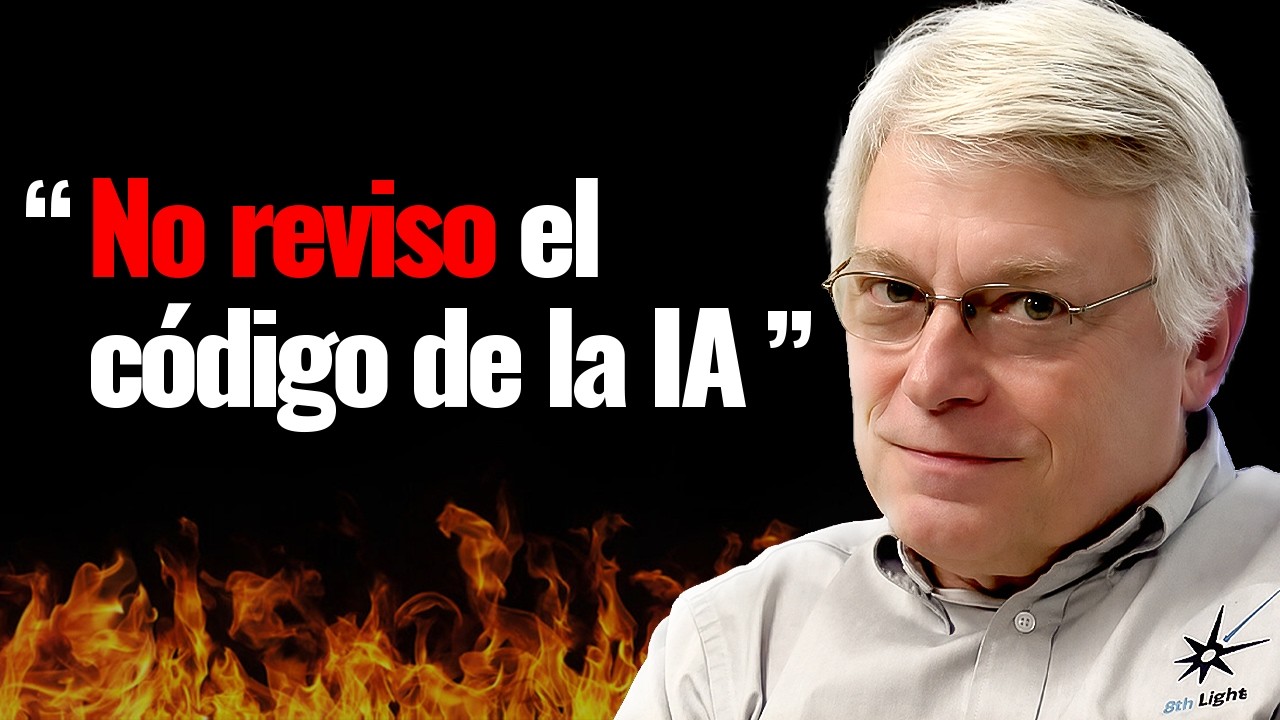
Què passa si una empresa pot estalviar diners substituint treballadors per intel·ligència artificial, però els treballadors acomiadats també són els clients que sostenen el consum? Aquesta és la pregunta que la periodista Katty Kay planteja a Gerry Tsoukalas, coautor amb Brett Hemenway Falk de l’estudi The AI Layoff Trap.
La resposta del vídeo no és una predicció que l’economia s’enfonsarà inevitablement. És l’explicació d’un model teòric: en un mercat competitiu, cada empresa pot tenir incentius per automatitzar més del que convindria al conjunt, fins i tot quan els directius entenen que una onada general d’acomiadaments reduiria la demanda.
1. El dilema: estalviar salaris també pot destruir clients
El punt de partida apareix a 00:45. Tsoukalas recorda que diversos responsables de laboratoris d’IA preveuen que la tecnologia podrà assumir moltes feines. Ell i Falk es pregunten qui comprarà els productes si una part molt gran dels ingressos laborals desapareix.
Per explicar-ho, el professor simplifica l’economia fins a deixar-hi una sola empresa que fabrica un únic producte. Si aquest monopoli acomiada el 90% de la plantilla, s’estalvia salaris, però també perd bona part dels seus compradors. Com que assumeix tant el benefici de l’automatització com la pèrdua de demanda, té incentius per buscar un equilibri i no automatitzar en excés.
Aquest experiment mental no descriu una economia real. Serveix per aïllar el mecanisme que interessa als autors: la relació entre la decisió d’acomiadar i la despesa futura dels treballadors.
2. La competència canvia completament els incentius
La situació es transforma a 02:02, quan ja no hi ha un monopoli sinó moltes empreses. Cada companyia captura tot l’estalvi que obté substituint un treballador, però només suporta una petita part de la demanda que es perd. Aquella persona comprava a moltes empreses, no únicament a la que l’ha acomiadada.
Des del punt de vista individual, automatitzar continua semblant racional:
- l’empresa redueix immediatament els costos;
- la pèrdua de vendes pròpia sembla petita;
- els competidors poden automatitzar encara que ella s’aturi;
- quedar-se enrere pot fer-la menys competitiva o expulsar-la del mercat.
El problema apareix quan totes raonen igual. Cadascuna exporta als altres una part del cost dels acomiadaments i, en conjunt, erosionen la base de consum que totes necessiten. L’estudi anomena aquest efecte una externalitat de demanda.
3. Veure el precipici no permet evitar-lo
Kay pregunta per què uns consellers delegats racionals avançarien cap a un resultat perjudicial que poden anticipar. La resposta, a 03:42, és que entendre el problema col·lectiu no elimina l’incentiu particular.
Si una empresa decideix frenar mentre les altres continuen adoptant IA, perd l’estalvi de costos i pot quedar fora de joc. Si les altres també frenen, la primera obté un avantatge important si incompleix l’acord. En terminologia de teoria de jocs, automatitzar és l’estratègia dominant dins del model: és la millor resposta individual, encara que el resultat compartit sigui pitjor.
La comparació amb el dilema del presoner ajuda a entendre la trampa. No cal suposar que els directius siguin ignorants o malintencionats. N’hi ha prou que cada empresa optimitzi el seu propi resultat en un sistema on no paga tot el cost social de la decisió.
4. L’autocontenció empresarial no és una solució estable
Tsoukalas recorre a l’Odissea a 04:42. Ulisses sap que no podrà resistir el cant de les sirenes i demana que el lliguin al pal del vaixell. La metàfora suggereix que les empreses necessitarien un compromís previ que limités la substitució de persones.
Però el mateix investigador admet que l’autocontenció voluntària és fràgil. Encara que diversos competidors acordin frenar, cadascun conserva l’incentiu per trencar el pacte quan surt de la sala. Adoptar més IA mentre els altres compleixen l’acord és, precisament, l’oportunitat de guanyar quota de mercat.
També hi ha un problema pràctic i jurídic: la coordinació entre empreses rivals pot topar amb les normes de competència. Per això els autors no confien que un pacte informal entre consellers delegats resolgui el mecanisme.
5. La proposta dels autors: gravar la substitució, no l’ajuda
A 06:22, Tsoukalas defensa una intervenció externa. Segons el seu model, mesures com una renda bàsica, donar participacions als treballadors, reciclar competències o gravar el capital no corregeixen directament l’incentiu que origina l’excés d’automatització.
La proposta central és un impost pigouvià: fer que l’empresa assumeixi una part del cost que imposa a la resta quan substitueix completament un treballador per una màquina. El professor distingeix explícitament entre reemplaçar i augmentar:
- utilitzar IA perquè una persona sigui més productiva no rebria el mateix tractament;
- eliminar la plaça i substituir-la íntegrament sí que tindria un cost addicional;
- alternativament, es podrien subvencionar les empreses que mantinguin i requalifiquin la plantilla.
El paral·lel que fa el vídeo és l’impost sobre el carboni: el preu intenta incorporar a la decisió privada un dany que, altrament, recauria sobre el conjunt. El disseny real seria molt complex. Caldria definir què compta com a substitució, evitar que les empreses disfressessin acomiadaments i coordinar jurisdiccions.
6. Què diu el model i què no demostra
Aquest matís és essencial. The AI Layoff Trap és un treball matemàtic de més de seixanta pàgines, no un estudi empíric que hagi mesurat una onada d’acomiadaments causada per la IA. El seu resultat depèn d’hipòtesis sobre la velocitat de substitució, el consum dels propietaris, la creació de noves feines, els salaris i la capacitat de l’economia per reabsorbir treballadors.
Els autors formulen el problema de manera condicional: si la IA desplaça persones més ràpidament del que l’economia les recol·loca, apareix el risc d’erosionar la demanda. El paper identifica un mecanisme possible i en deriva una política dins del model; no prova que aquest escenari sigui inevitable ni estableix quants llocs de treball es perdran.
El mateix Tsoukalas reconeix a 08:22 que no hi ha consens sobre la magnitud futura del desplaçament. La seva previsió personal és un augment fort de la desigualtat i el risc d’inestabilitat política, però ho presenta com una opinió, no com una dada observada.
Conclusions
El missatge més útil del vídeo no és que els consellers delegats vulguin destruir els seus clients. És que la racionalitat individual no sempre produeix un resultat racional per al conjunt. Una empresa rep tot el benefici immediat d’automatitzar, mentre reparteix entre moltes altres una part de la demanda que destrueix.
Si aquest mecanisme arriba a ser rellevant, esperar que cada empresa es moderi voluntàriament seria insuficient. Caldria un sistema de regles que premiés l’augment de la feina humana i fes visible el cost de la substitució total.
La gran pregunta continua oberta: si la IA crearà prou feines i renda nova abans que desapareguin les antigues. L’estudi no la resol, però ofereix una advertència concreta per al debat: no només importa com redistribuir els guanys després de l’automatització, sinó també quins incentius determinen la velocitat amb què s’automatitza.
Contrast i context
Fonts consultades
- 01
-
02
arXiv The AI Layoff Trap
Font de treball
Transcripció amb marques de temps
Consulta la transcripció
-
0:00
, obre el vídeo en una pestanya nova
A few weeks ago, I read a paper called the AI Layoff trap by two professors, Jerry to call us and Brett Falk. It's a warning about a possible future where AI is good enough to do a lot of our jobs. Companies would start replacing workers to cut costs, but those workers are also customers who spend money at businesses. If every company fires a lot of people, eventually hardly anyone is left with enough money to buy anything and keep the economy going. What scared me most though wasn't the idea that Maslayov's could happen? It was that even if CEO's see this crisis coming and desperately want to avoid it, they might not be able to. Waiting for the firms to figure it out for themselves, I think is the worst possible thing we could do. The CEOs are coming out from these foundational labs, and they're constantly saying AI is going to replace everyone's job. And the main question we wanted to understand is, who's going to be left to buy products if everyone gets automated and replaced by a robot.
-
0:59
, obre el vídeo en una pestanya nova
So we ended up building our own model and writing our own paper about this very topic. So that's how this whole thing started. What you were talking about is something that you called AILayoffTrap. Explain what that is. Yeah, sure. And here might be helpful to simplify things down a little. The paper is 60 pages of mathematics. So we don't need to get into that. Imagine there's just one very large company monopoly in a market. And they're making widgets. and everyone's working at this company. And this brand new shiny technology arrives AI. So the CEO is looking at this and saying, all right, well, I could adopt this technology,
-
1:40
, obre el vídeo en una pestanya nova
but I would have to lay off, let's say 90% of my staff, the problem is these people are also the ones buying widgets for me. And so when it's just a simple thought experiment like that, with just one company, they actually end up doing the right thing, meaning you take that into account and you don't over-automate. you do just just enough, right? You balance these things out. What's interesting and what's different is when you're in a competitive setting. And that's where everything changes. So you're no longer a monopoly. There are lots of widget companies. Yeah, so now there's a bunch of widget companies, lots of workers everywhere. So you're benefit of adopting this technology. It's great. You save a bunch of costs on producing the products. You have to lay some people off.
-
2:22
, obre el vídeo en una pestanya nova
Now you're thinking on the other side of the equation, which is who's going to be buying my products? Now, when there's lots of companies around, a lot of other workers, you don't worry so much about the fact that your own workers might no longer be buying your products. You can say, well, there's plenty of other people around. And you know what? My workers were only spreading their money around anyway. It wasn't that they were only buying for me. They were buying from the 100 other widget companies. And so really what I'm losing now, just a fraction of that, because they weren't spending much with me anyway. What happens, Jerry, then if the other companies start laying off their workers? There you go. That was the exact thing I was going to say next, right?
-
3:00
, obre el vídeo en una pestanya nova
And that's the problem when you're looking at this for market perspective. If everyone thinks in the same way you end up with this essentially disastrous scenario. Where at the end of the day the demand is entirely eroded and every firm is worse off. But CEOs are rational, right? They see this cliff coming. It's not that they don't understand the economics that you're laying out. This lay off trap that if you get rid of all the workers, you've got nobody left by your groceries or your widgets or your home furnishings or whatever it happens to be. So why are they all collectively driving towards this cliff if they know that they could be killing their own customer base? Because it goes back to, yeah, it's a great question. It goes back to this idea that when you're looking at the math, when each individual CEO is looking at the cost benefit analysis, the cost side of the equation is almost zero at this point, because from your perspective, I'm laying off workers, but they weren't really spending much with me anyway. So from my perspective, individually, it makes sense to do that. And if I hold back and I don't, all the other companies are gonna automate
-
4:09
, obre el vídeo en una pestanya nova
and now I'm going to go bankrupt, I'm gonna lose my workers anyway. So no matter what you do, no matter what the other companies are doing, your best strategy is to adopt as much of this technology as possible. And that's called the dominating strategy in economics. It's been known for a really long time. And it creates some really nasty outcomes, including some classical things like the prisoners dilemma, which won a noble price a long time ago. So that's the trap. You've also gone a little bit further, Jerry, which is to lay out what could be done about it. Right. So if you don't mind, let me take you back 3,000 years. Okay. second. So I don't know if you've read the Odyssey.
-
4:49
, obre el vídeo en una pestanya nova
We basically, one of the high-level ideas in that story is this was after the Trojan War in Greece where one of the heroes Odesiz, he has to go through sirens in terms of his boats that are all knowing beings and have beautiful music but also divine knowledge. But the problem, of course, is that in that story, it's a literal trap where humans end up dying who go on this island with the sirens. And so he asks his sailors to time to the mast of the ship. He says no matter what I say or what I scream or what I do, keep me tied there. And that's what we're kind of advocating as a solution here. It's the fact that companies need to slow down with the firing or the replacement of a, you know, human workers with AI. So we're calling for self restraint just like in that, um, honestly story. But, Jerry, I mean, I love the idea that you're calling for self-restraint. And I wish I saw that in the tech world emerging, but I don't. I don't see IC companies rushing like sailors to those sirens, trying to get to this as quickly as possible. So what can be done if companies decide not to exercise self-restraint and let's be honest companies and not best known for their self-restraint, if they don't think that it's in their own shareholder interest?
-
6:07
, obre el vídeo en una pestanya nova
Absolutely, and that's exactly the point of the paper and the point we want to make to our other economists colleagues But also the policymakers is that they will not self-restriant that's literally the prediction of the mathematical model And so what you need in that case just like in the Odyssey example, you need an external force and the instrument that we propose You know, we went through about six different popular proposals that economists are discussing right now things like universal basic income and giving workers equity. But the only one that really works is the one that directly addresses the incentive to replace a worker with a machine. If you're going to want to replace a massive amount of your workforce with a I, we're saying to either impose a tax on that so that it's costly to replace the fully replace a worker, right? It wouldn't be costly to augment them with a I, but it would be costly to fully replace them with a I. So it's basically a tax on firing and the companies were therefore to have to bear some of the responsibility for replacing human workers with automated workers effectively. Has it ever been tried, Jerry before, has there been a moment in history where this kind of tax has been used and been successful? The closest thing I can think of is the carbon tax, which doesn't directly penalize the firm for polluting a river, but allows it to offset some of the pollution through a government mandated target. And so that's what it would have to look like if we wanted to implement it. But because the word tax is pretty toxic, it might not be directly implementable this way. And then you can start thinking of other things that might be a little bit more realistic. You could also provide subsidies to firms that keep their workers
-
7:53
, obre el vídeo en una pestanya nova
and certifying them. So there's all sorts of other instruments around this that might not be perfect but that we could use. If companies don't exercise self restraint, if policy makers fail to follow your recommendations, what does the United States look like in ten years? Let's say, what does it look like if we don't avoid this trap somehow? You're putting me on the spot here, Katty. So I'll answer it, but let me pre-face by saying again, no one agrees about this very question. Have people on one side, half the people, on the other side. My view is there's going to be a tremendous amount of wealth inequality, something that we've never seen before, and we already have lots of problems with that. And that's my prediction. If we do nothing, this technology is going to keep on improving, and I'm very confident about that. And then we're going to have massive wealth and equality problems which could leave to political instability and all sorts of other things that we've seen, for instance, in the past financial crisis in 2008.
-
9:03
, obre el vídeo en una pestanya nova
Are you confident, Gerry, that's the dystopian view. Are you confident that actually CEOs are smart enough and rational enough that they will understand the crap you're laying out and try to do something to mitigate against it? No, I mean if I believe my own work, it's not that they, it's very hard to create agreements across companies. Because as soon as you agree, let's say you agree, let's slow things down. Let's say on Throbic and OpenAI, I do greater slow things down. And then Microsoft agrees, you know what, let's scale our efforts down, and Google agrees to do that as well. As soon as you walk out of that room, you're incentive, unless you're penalized somehow, to put in place a system of sticks and carrots and the sticks have to be pretty significant because once you shake the hand and you walk out of the room you immediately look at the gains you can get from adopting a eye now that you know that no one else will, right? That's your opportunity and that's your duty to your shareholders waiting for the firms to figure it out for themselves. I think it's the worst possible thing we can do. Jerry Tukalus, thank you very much. Thank you for joining us. Thanks for having me.